Nineveh Governorate, Iraq
From Return to Resilience: Urban Reintegration for Safer and Inclusive Cities
The city of Mosul in Nineveh Governorate faces a complex urban challenge linked to the return of conflict-affected families to city neighborhoods without clear and sustainable pathways for social reintegration, posing long-term risks to social cohesion and urban safety. This initiative addresses the challenge through an integrated urban reintegration model led by the local government in coordination with education and health authorities and civil society actors.The model focuses on women’s empowerment, reintegrating children into formal education, providing psychosocial support, and promoting community participation to reduce stigma and rebuild trust within neighborhoods. By strengthening local institutional coordination, the initiative transforms returning families from a vulnerable group into active contributors to community stability. The model enhances urban resilience, supports social cohesion, and is scalable and replicable in other post-conflict cities.
Urban neighborhoods in Mosul, Nineveh Governorate, face complex post-conflict challenges following the return of approximately 24,000 conflict-affected individuals without clear and sustainable urban mechanisms for social reintegration. Around 60% of returnees are children under the age of 14, and the population includes approximately 3,000 single mothers forming about 1,300 households due to detention, disappearance, or flight of male family members.The absence of reintegration mechanisms has contributed to social fragmentation, stigma, increased psychosocial needs, and disrupted access to basic services. Children have been particularly affected, as many are unable to return to formal education due to social barriers and missing civil documentation required for school enrollment. Gender-based differences are evident, with girls more frequently denied access to education due to social norms and protection concerns.Previous responses relied mainly on short-term humanitarian or security-focused measures that failed to address structural, administrative, and social drivers of exclusion. Bureaucratic barriers and discriminatory practices have further deepened vulnerability.This initiative aims to establish an integrated urban reintegration model that strengthens social cohesion, empowers women, and restores children’s access to education through improved administrative access and community participation, using a preventive, non-security approach aligned with national policies and the Sustainable Development Goals.
The motivation behind this innovation arises from the understanding that post-conflict reintegration challenges in Mosul cannot be effectively addressed through short-term humanitarian assistance or security-led responses alone. The return of conflict-affected families revealed the need for a preventive, urban-focused approach that treats social reintegration as a core element of local governance and long-term urban stability.
During the design and planning phase, key factors were carefully considered, including social stigma within communities, limited institutional coordination, disrupted access to education and administrative services, and the specific vulnerabilities of women and children. These factors informed a model that prioritizes social cohesion, inclusion, and trust-building rather than control-based interventions.The strategy was tailored to the local context of Mosul and Ninava Governorate by building on existing governance structures and service delivery systems. Instead of creating parallel mechanisms, the model strengthens coordination among municipal authorities, education and health directorates, and civil society actors. Community engagement tools were designed to be culturally sensitive and conflict-aware, ensuring local ownership, feasibility, and sustainability within Mosul’s post-conflict urban environment.
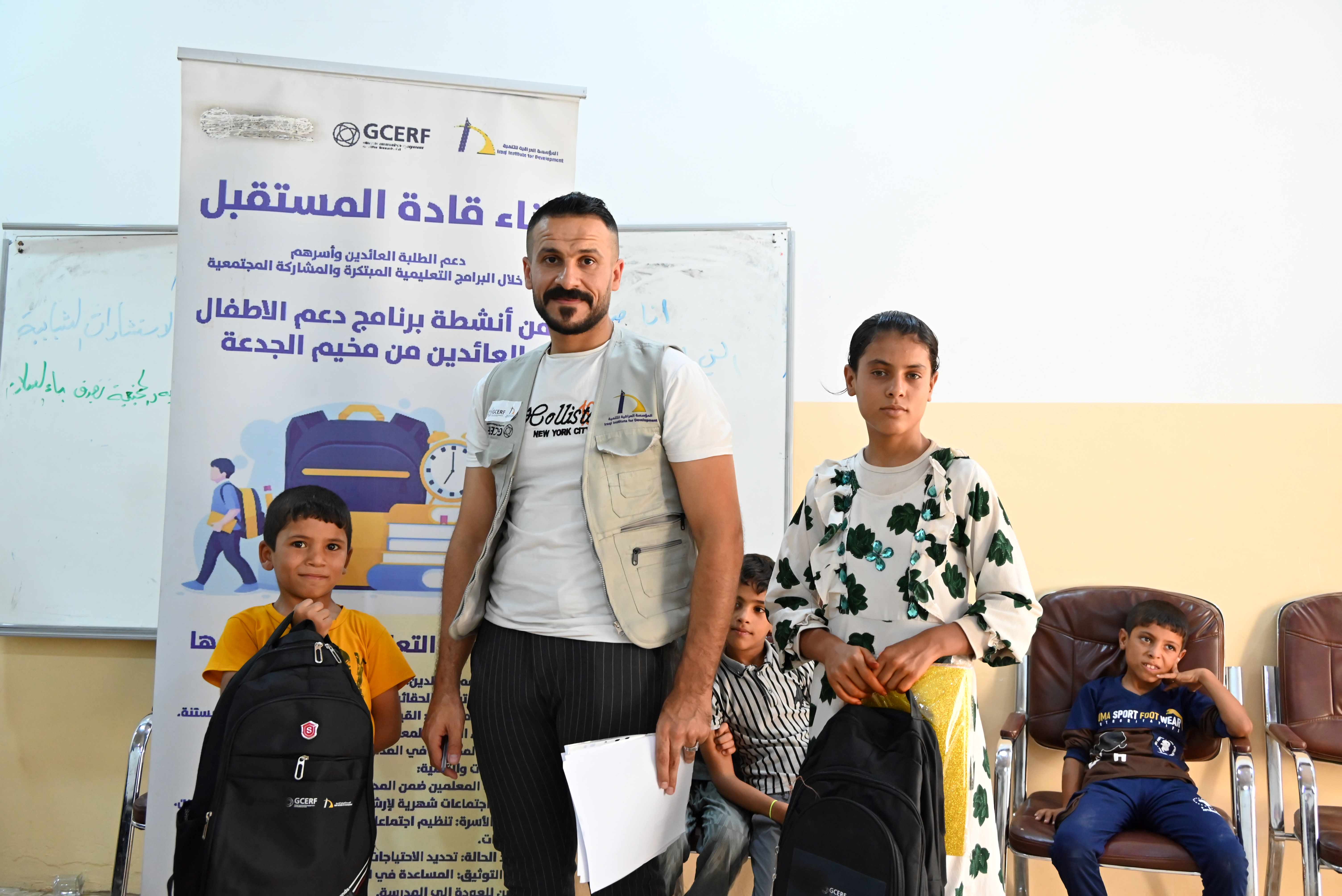
The initiative provides clear evidence of change through individual stories that reflect its strong social and human impact. One such case is Yaqeen Sami, a 23-year-old young woman who faced severe economic pressure and community stigma related to return, leading her to attempt suicide and lose hope for her future. After joining the organization’s rehabilitation programs, including mental health and psychosocial support, individual counseling, and skills-building activities, her condition improved significantly.Yaqeen rebuilt her self-confidence, reintegrated into the local community, and established a small business that enabled her to become economically self-reliant and support her family, marking a transformation from vulnerability to stability.At the community level, the initiative supported the return of approximately 3,400 children to formal education by addressing economic and administrative barriers. This included distributing school supplies and facilitating the issuance of 130 official civil documents for children who previously lacked them, enabling school enrollment. These children showed improved attendance and academic performance, demonstrating lasting behavioral and social change and the effectiveness of integrated reintegration interventions.