São Paulo, Brazil
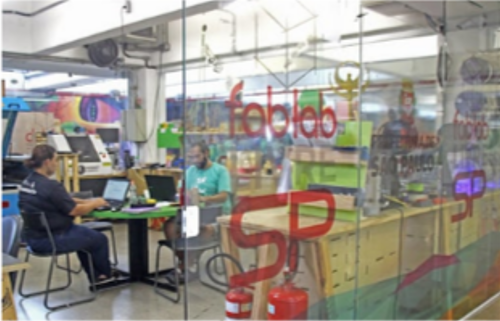
FAB LAB LIVRE SP: Public Digital Fabrication for Inclusive Urban Innovation
The FAB LAB LIVRE SP is the largest public digital fabrication laboratory network in the world, with 17 units, implemented by the Prefeitura de São Paulo to promote technological inclusion, social equity, and local economic development. Established in 2015, the initiative operates a distributed network of free-access labs located primarily in socially vulnerable areas of São Paulo. The program provides training in digital fabrication, 3D printing, electronics, programming, and maker culture, targeting youth, women, and low-income populations. Beyond technical training, it fosters community innovation, entrepreneurship, and creative problem-solving aligned with urban challenges. By integrating education, innovation policy, and territorial development, FAB LAB Livre SP transforms public infrastructure into engines of inclusive digital economy, strengthening local capacities while reducing technological and social inequalities in one of the largest metropolitan areas in the Global South.
The city of São Paulo, one of the largest metropolitan areas in the Global South, is marked by profound socio-spatial inequalities reflected in unequal access to technology, quality education, and economic opportunities. Peripheral districts experience higher youth unemployment rates, lower levels of digital literacy, and limited integration into innovation ecosystems and the knowledge economy. Prior to 2015, access to digital fabrication technologies—such as 3D printing, electronic prototyping, and programming—was largely restricted to universities, private institutions, or innovation hubs concentrated in central and higher-income areas. This spatial concentration reinforced structural exclusion from emerging sectors of the digital and creative economy, particularly for low-income populations, youth, and women. The FAB LAB LIVRE SP was conceived as a municipal policy response to democratize access to digital manufacturing technologies, foster inclusive innovation, and address structural urban inequalities. By transforming public facilities into open-access digital laboratories, the city redefined technological infrastructure as a tool for social inclusion, local economic activation, and community-based urban innovation.
The conception of the FAB LAB LIVRE SP stemmed from the recognition that urban innovation could not remain restricted to private ecosystems or academically concentrated environments located in central areas of São Paulo. The core motivation was to transform innovation infrastructure into a territorially distributed, free, and universal public policy. During the planning phase, three structural factors were considered:
(i) socio-spatial inequality and the need for territorial decentralization;
(ii) the potential of digital fabrication as a tool for productive inclusion and local entrepreneurship;
(iii) the integration of technical training, maker culture, and sustainable urban development.
The model was designed as a distributed municipal network, primarily installed in peripheral districts and integrated into existing public facilities. The strategy combined open access to digital fabrication equipment with structured training programs, workshops, and educational pathways, enabling both civic experimentation and formal technical qualification. The innovation lies in institutionalizing maker culture as an ongoing public policy, incorporating municipal governance, public funding, and network-based management. The solution was adapted to the local context through territorial deployment, full free access, and a priority focus on youth and vulnerable populations.
Since its creation in 2015, the FAB LAB LIVRE SP has expanded access to advanced technological infrastructure for populations historically excluded from innovation ecosystems in São Paulo. The initiative has democratized access to digital fabrication technologies by offering free training programs, open lab access, and community-based innovation activities in peripheral territories. Observable outcomes include increased digital literacy, greater participation of youth and women in technological fields, strengthened local entrepreneurship initiatives, and enhanced community capacity for problem-solving using digital tools. Progress is monitored through administrative data systems that track enrollment, attendance, course completion, and user profiles. These indicators support evidence-based policy management and continuous improvement of training pathways. Beyond quantitative outputs, qualitative impacts include increased technological self-confidence among participants, greater community engagement with public innovation spaces, and the consolidation of a municipal model that integrates digital inclusion, productive training, and urban development within a single public policy framework.