Kalush, Ukraine
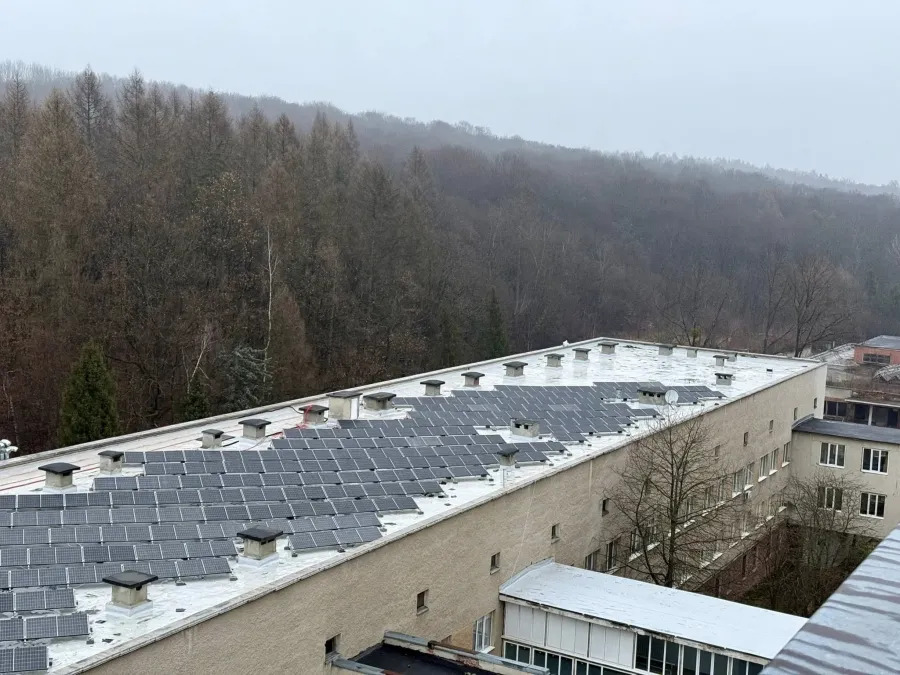
Green Energy for the Cluster Medical Institution of Kalush Community
The “Green Energy for the Cluster Medical Institution of Kalush Community” initiative enhances the energy resilience of critical healthcare infrastructure through the installation of a 450-kW solar power plant at Kalush Central District Hospital. It addresses energy instability, rising electricity costs, and risks to uninterrupted hospital operations under martial law, ensuring stable power supply for critical departments and continuity of medical services.The system is expected to generate about 28,610 kWh annually, reducing reliance on the grid and lowering public budget expenditures. With an electricity cost of 12.89 UAH per kWh, estimated annual savings are approximately USD 8,000. The project also reduces CO₂ emissions by about 15 tons per year, contributing to climate action and environmental sustainability.Overall, the initiative applies sustainable development principles, strengthens healthcare reliability, reduces financial pressure on the community budget, and improves the resilience and quality of medical services for the population of Kalush.
Kalush territorial community is facing a critical problem of energy instability, which has become particularly severe due to martial law. Medical facilities, particularly Kalush Central District Hospital, are highly dependent on the centralized power grid, causing risks to the uninterrupted operation of critical departments, namely intensive care, operating rooms, and other vital departments. Existing solutions, such as diesel generators, are expensive, environmentally harmful, and do not ensure long-term energy resilience.The initiative aims to promote renewable energy sources by installing a solar power plant with the necessary capacity, what will reduce dependence on the grid, improve the reliability of medical services at the institution, and cut energy costs.
The initiative arose in response to the growing risks of energy instability and the need to ensure the uninterrupted operation of medical institutions in crisis situations. The primary motivation was to create a sustainable, environmentally friendly and cost-effective solution that would ensure the independence of Kalush Central District Hospital and reduce its reliance on traditional energy sources. Key factors were taken into account during the design phase: the high energy consumption of the medical institution, the technical condition of the infrastructure, the possibilities for integrating renewable energy sources, access to international technical assistance, as well as the needs of vulnerable population groups. Particular attention was paid to phased implementation, what allows the solution to be scaled according to available resources.
The innovative aspect of this approach lies in combining various funding sources (international aid and community resources) and integrating solar power generation into the existing energy supply system of the medical institution.The solution was developed with the specific characteristics of the community taken into account: climate conditions, energy challenges during wartime, and the institutional capacity of the community. The initiative aims to create a model that can be used by other facilities and communities in Ukraine.
The implementation of this initiative is already delivering significant results and positive changes. The solar power plant helps cover part of the hospital’s electricity demand, directly contributing to SDG 7 (Affordable and Clean Energy), SDG 3 (Good Health and Well-being), and SDG 13 (Climate Action). Measured outcomes include annual electricity generation of approximately 28,610 kWh, budget savings of around UAH 368,000 per year (about USD 8,000), and a reduction of about 15 tons of CO₂ emissions annually. Since installation, the hospital has not experienced a single disruption in critical departments during emergency power outages and has significantly reduced reliance on a diesel generator, which previously caused additional emissions and noise. Before the project, the hospital recorded 7 outages lasting more than two hours in one year, requiring backup generator use. “While I was in the Cardiology Department, there was a power outage, but thanks to the solar power plant, the equipment continued to operate without interruption. For me, this meant safety and confidence,” says patient Ivan Melnyk.Progress is monitored through the plant’s digital monitoring system, including generation, consumption, and savings data, as well as hospital financial reports, collected and analyzed by hospital technical staff.