Qingdao, China
Love@Qingdao: Public Service Innovation for a Youth-Friendly City Focused on Marriage and Romance
Let’s be honest: a city can’t pay for your love. But it can offer the kind of place where love wants to show up — a lighthouse at sunset, a bride’s veil catching the sea breeze, a couple from out of town arriving for a pre-wedding photo shoot and finding themselves reluctant to leave. That’s “Eternal Vows, Love@Qingdao” — our city’s commitment to turning romance into public service. Love@Qingdao began when we realized that young people need better places, not just better apps. In response to global youth challenges — lack of dating avenues, inadequate public services, high marriage costs — this initiative draws on Qingdao’s mountain, sea, and cultural assets to build a full-cycle public service system for marriage and romance, strengthening youth belonging and offering a replicable model for inclusive cities. In 2025, out-of-town couples registering in Qingdao jumped 41.72%, and total marriages reached over 54,000 — up nearly 40% year-on-year. The city’s slogan? “Mountains and seas never age; romance blooms just right.” The couples came. The sea breeze was gentle. The weddings were unforgettable.
Before Love@Qingdao, a young software engineer named Xiao Jiang summed up the dating scene: “I swipe right 47 times a day, but haven’t had a real conversation in three months.” He wasn’t alone. A China Youth Daily survey of 2,000 singles found the top barriers: 50.7% had fixed social circles, 47.5% were “too shy”, 46.0% struggled to express themselves, and 43.4% had limited channels to meet people. Many young Qingdao residents wanted to date but lacked time, space, and a comfortable, trustworthy setting. Work consumed their days; marriage registration offices still felt stuck in the 1980s—fluorescent lights, plastic chairs, zero ambiance.The old model—hoping young people would figure it out themselves—ignored deeper needs: learning how to communicate, handle conflict, and grow together. These skills are rarely taught at home or school. Guided by Qingdao’s Youth-Friendly City Implementation Plan and Love@Qingdao: Destination Wedding City Plan, this initiative integrates marriage- and romance-friendly approaches into urban governance, directly supporting UN SDG 10 (Reduced Inequalities) and SDG 11 (Sustainable Cities and Communities). It creates a sustained, public-welfare-oriented space that connects youth social needs with city support for new families.
The project introduces four key public service innovations.
1) Service Environment Innovation: Extending marriage registration and dating services from administrative halls to city landmarks, communities, and industrial parks, creating accessible and immersive public service settings. 2) Full-Cycle Service Innovation: Establishing a comprehensive public service system covering "social events - relationship guidance - marriage registration - family building." 3) Governance Model Innovation: Creating a multi-departmental coordination mechanism involving civil affairs, youth leagues, human resources, culture and tourism, alongside a multi-stakeholder partnership model engaging government, enterprises, social organizations, and communities. 4) Rights Protection Innovation: Building a comprehensive support system for youth marriage and development from employment, consumption, housing, and legal perspectives. All designs are deeply adapted to Qingdao's coastal city characteristics and youth development profile.
In the first year of implementation, three core results were achieved in public service, youth development, and urban governance.
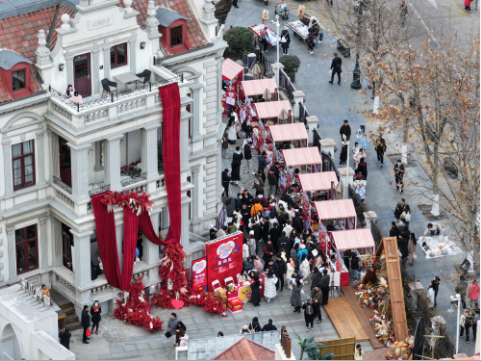
Service Quality: We listened to what young people actually complained about. “Why is there no mirror or touch-up space before the ceremony photos?” “Every date spot feels the same: the same wall, the same cafe, the same old photos. Where’s the fresh romance?” So we acted. We added makeup lounges at high-speed rail stations. Meanwhile, a three-tier public service network was established. Over 216 events reached 150,000 young people. Satisfaction with inter-provincial marriage registration hit 98%. Construction completed on 14 landmark wedding tourism spots and 27 outdoor venues, plus coastal micro-renewals. All this made Qingdao significantly more youth-friendly.
Youth Development: The initiative effectively addressed the lack of dating avenues and relationship guidance, promoted simple and civilized wedding customs, and significantly boosted youth's sense of belonging and happiness.
Urban Governance: A youth-friendly governance model involving multi-departmental coordination and multi-stakeholder participation was formed, integrating the concept of being marriage-and-romance-friendly into urban planning and public service provision, continuously enhancing inclusive urban development and providing a practical model for China's youth-friendly city development efforts.