Muğla, Türkiye
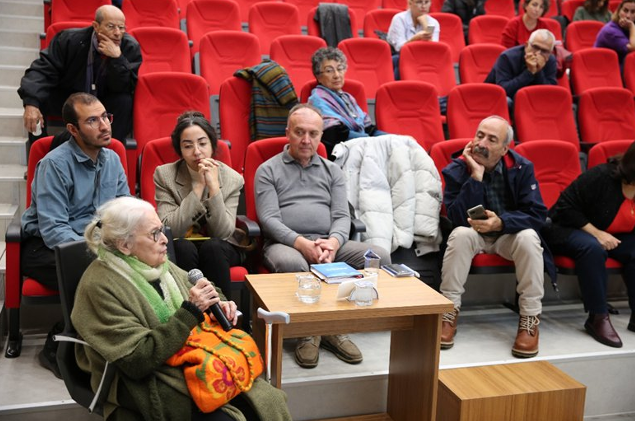
Philosophy and Life Academy: Thinking Together for Sustainable Cities
The Philosophy and Life Academy, established in 2023 under Muğla Metropolitan Municipality's Department of Culture, Arts and Social Affairs, is Turkey's first municipal philosophy institution. Built on the principle of philosophy for life, not philosophy for philosophy, the Academy aims to make critical thinking a public service rather than an academic discipline. Operating through two pillars — Practical Philosophy (weekly community workshops, children's philosophy sessions, critical film days, and district outreach across all 13 districts) and Theoretical Philosophy (congresses, panels, and seminars with leading academics and UNESCO collaboration) — the Academy has reached 6,416 participants through 136 workshops to date. By fostering ecology, ethics, political, and epistemological literacy among children and adults alike, the Academy builds the intellectual foundations of a Thinking City Model: an innovative governance approach where citizens become active, critical, and engaged participants in shaping sustainable urban democracy.
Contemporary cities face challenges that extend far beyond infrastructure and transportation — including social polarisation, weakening democratic participation, declining critical thinking, and the erosion of civic identity. Muğla, as a fast-growing metropolitan area, is no exception. Previous approaches to urban culture focused primarily on entertainment-based programming, leaving a significant gap in citizen capacity-building and philosophical literacy. The Philosophy and Life Academy was established to fill this gap by institutionalising philosophical thinking as a municipal public service.The Academy's three foundational principles — Transforming Thought into Public Service, Participatory Urban Culture, and City Experiences on an Ethical and Intellectual Foundation — directly respond to these challenges. The initiative aims to cultivate conscious, solution-oriented citizens who actively engage in democratic decision-making processes and contribute to a resilient, sustainable urban model.
The Philosophy and Life Academy was born from a simple yet radical conviction: philosophy should not be confined to university lecture halls — it belongs in the streets, community centres, and public squares of every city.
During the design phase, three key factors shaped the initiative. First, a needs assessment revealed that Muğla's citizens lacked structured spaces for critical dialogue and collective reasoning. Second, the Academy adopted Matthew Lipman's Community of Inquiry Model — a process-oriented, non-didactic methodology proven to develop analytical, creative, and collaborative thinking across all age groups. Third, the programme was carefully tailored to Muğla's diverse local context: a metropolitan area spanning 13 districts with varying demographics, educational backgrounds, and cultural identities. Rather than imposing a top-down curriculum, the Academy designed flexible, accessible sessions — free of charge and open to all — covering ecology and nature philosophy, political and moral philosophy, epistemology, and philosophy of art. Outreach was extended to all 13 districts through the "Philosophy is on the Road" programme, ensuring geographic equity. This human-centred, evidence-informed design positions the Academy as a replicable and scalable model for other municipalities seeking to strengthen civic culture and democratic resilience.
Since its establishment in 2023, the Philosophy and Life Academy has generated measurable and observable impact across multiple dimensions of urban civic life.Quantitative outcomes: 136 workshops delivered, 6,416 participants reached across all 13 districts of Muğla, spanning children, adults, and senior citizens. Session quotas consistently fill to capacity, with waitlists maintained for oversubscribed programmes — demonstrating sustained and growing public demand.Behavioural change: Facilitators have observed a consistent shift in participants' willingness to engage in critical dialogue, tolerate differing perspectives, and apply philosophical reasoning to everyday urban and environmental challenges. Initial resistance to analytical thinking — particularly among adults — is overcome within a minimum four-week engagement period using the Community of Inquiry Model. Policy impact: The Academy has elevated philosophy-based civic education to an official municipal public service — a first among Turkish local governments — establishing a replicable institutional model.