Manizales, Colombia
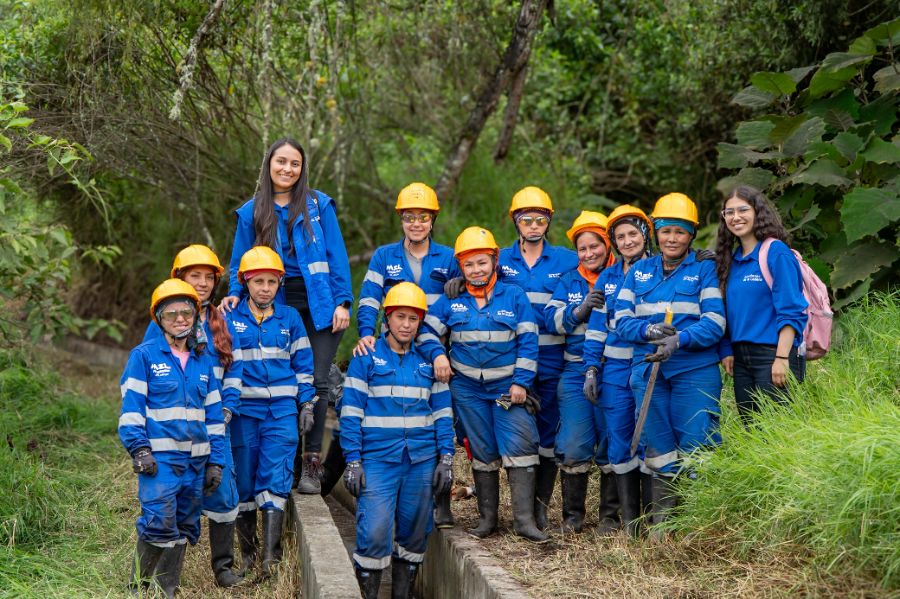
Guardians of the Slope: Women-Led Climate Resilience on Urban Hillsides
Manizales faces chronic landslide risk in 12 urban communes and, since May 2024, five rural townships. Before 2003, slope maintenance depended on costly external contractors, while hillside residents — predominantly single mothers — remained excluded from risk management decisions. Guardianas de la Ladera transforms this dynamic by employing women heads of household as professional slope monitors and community resilience agents. Today, 80 women maintain over 1,000 geotechnical works, georeference critical hazard points, and deliver educational programs at 40 public schools through the "Allies of the Environment" program. The results include no landslide fatalities in 2024 or 2025, protection for 194,000 urban residents, and 591 community safety commitments signed in one year. Certified by the UN as a Resilience Node, Manizales offers mountain cities worldwide a replicable model in which gender inclusion and climate adaptation are not parallel goals — they are the same solution.
Manizales, a mid-sized Andean city of 470,000 inhabitants in Colombia, is situated on the western flank of the Central Cordillera at elevations between 870 and 4,050 meters above sea level. Its extreme topography — steep slopes, volcanic ash soils, active seismic faults, and high rainfall — makes landslides a permanent, life-threatening reality. In 2003 alone, the city recorded more than 90 landslides, 41 deaths, 100 injuries, 1,400 families evacuated, and 200 homes destroyed, forcing a declaration of public calamity. The structural challenge is threefold: a physical environment of extreme vulnerability, a population of low-income women heads of household living on the most exposed slopes, and an institutional model of outsourced maintenance that cost over USD 347,000 annually without generating social value. Previous approaches relied exclusively on technical contracting, treating slope stability as an engineering problem isolated from human vulnerability. This model failed to build community ownership, generate local employment, or create a risk culture among the most exposed residents.
The innovation emerged from a radical reframing: Manizales did not need more external contractors to maintain its 1,000+ slope stabilization works; it needed the women already living on those slopes to become permanent guardians of their own territory. In 2003, after a catastrophic landslide season killed 41 people and led to a declaration of public calamity, city leaders identified a structural paradox: the most vulnerable residents — single mothers in economically precarious households — possessed invaluable day-to-day knowledge of their hillsides. Meanwhile, outsourced maintenance cost USD 347,000 annually, with no community ownership or continuity.
The design solved both problems simultaneously by replacing costly contracts with community-based stewardship at a reduced cost (USD 195,000 in 2004) and converting women’s economic vulnerability into formal employment and technical expertise. Three principles shaped the model. Proximity: women are recruited from the same high-risk neighborhoods they protect, ensuring a genuine sense of belonging to the area. Integration: training combines geotechnical skills, environmental education, and gender empowerment, transforming workers into community risk ambassadors. Institutionalization: the program is embedded in the Municipal Development Plan 2024–2027, securing structural continuity across administrations. Guardian Alba Nidia Marín's testimony reflects the program's deepest value: it allowed her to buy her home and educate her children — safety and dignity, built together.
Since 2003, Guardianas de la Ladera has transformed 80 vulnerable women—single mothers living on Manizales' high-risk Andean hillsides—into certified slope technicians, generating formal employment while protecting 194,000 urban residents across 12 districts. Over time, 345 women have gained access to decent work through the program. In 2024, coverage expanded to five rural townships, reaching 4,900 additional inhabitants. The program monitors over 1,000 geotechnical mitigation works annually, maintaining drainage channels and slope stability infrastructure that prevents landslides in a city averaging 87 mass-movement events per year. In 2025, 450 mitigation actions were carried out — a 16.6% increase in efficiency over 2024. Changes in community behavior are demonstrated by 591 formal pledges signed last year, committing residents to co-maintain slope works, and by the participation of 40 schools in prevention curricula. Before the program, in 2003, external contractors spent USD 347,000 annually on reactive maintenance; that year, landslides caused 41 deaths and destroyed 200 homes. After implementation, Guardianas delivers permanent, proactive monitoring at a cost of USD 195,000 (a 44% cost reduction) while expanding coverage from 4 to 12 urban districts. In 2024, the UN-UNDRR certified Manizales as a Resilience Node, thereby validating this model.