Bogotá, Colombia
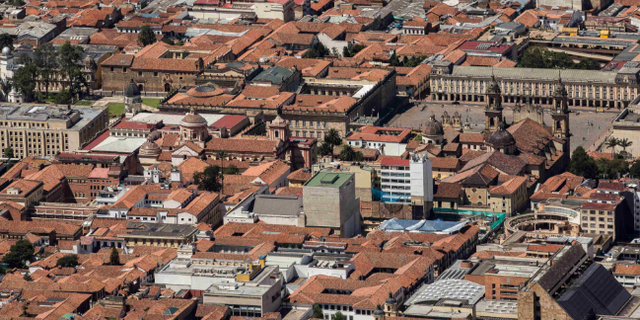
Reúsa y Revitaliza: Turning Vacant Buildings into Housing, Heritage and Climate Action
Bogotá faces a dual urban challenge: a housing deficit affecting 29,514 households alongside a growing stock of vacant, underused buildings in strategic central areas. Conventional responses relying on new construction and outward expansion have overlooked opportunities to reactivate existing urban assets. Reúsa y Revitaliza, launched in July 2024, is Bogotá's public innovation model addressing this gap by transforming dormant buildings into new housing while preserving heritage and reducing embodied carbon.
The program operates as an inter-institutional orchestration platform, connecting property owners, private developers, and public entities through a structured three-phase pathway: property registration and screening, a virtual marketplace, and project structuring support. Rather than direct public capital, an urban renewal enterprise provides technical de-risking, inter-institutional coordination, and feasibility assessments—unlocking private investment for adaptive reuse projects.
The program is expected to contribute approximately 450 housing units, representing 5% of the 9,000 solutions targeted in Bogotá’s 2024–2027 Development Plan. It also advances SDG 11 and SDG 13 by saving 50–75% embodied carbon compared to new construction, preserving up to 90% of materials, and demonstrating that public institutions can catalyze private investment without direct subsidies through collaborative governance and early-stage risk reduction.
In Bogotá, the Reúsa y Revitaliza program is tackling the paradox of vacant urban real estate in a context of critical housing shortages. By repurposing vacant buildings to support housing and cultural heritage, this initiative offers an important counterexample, engaging diverse stakeholders to overcome supply-and-demand challenges while reducing carbon emissions.