São Paulo, Brazil
Behavioral Sciences for Improving School Meals
This behavioural initiative uses low-cost interventions to encourage healthier food choices and reduce waste in public schools. Through improved communication and behavioral nudges, the program increased student participation in school meals while significantly decreasing food waste.
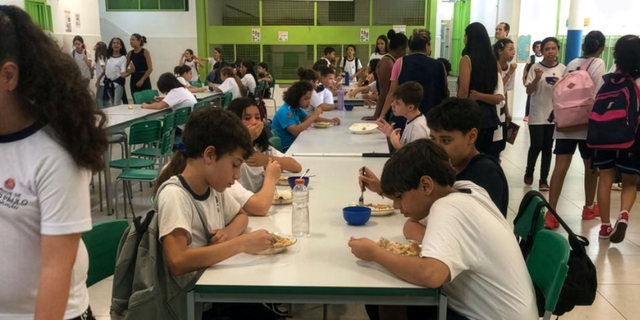
Led by the São Paulo City Hall Public Innovation Laboratory (Lab11) in partnership with the School Meals Coordination Office (CODAE), the project tested simple, low-cost interventions in the dining environment over an 11-month period. The project utilized a quasi-experimental design across eight schools, divided into control and treatment groups. Interventions included visual menus, social media-inspired posters encouraging food experimentation, positive verbal encouragement from kitchen staff, repositioning of trash bins to reduce impulsive disposal, and streamlined meal counting processes. Over 100 professionals were involved, including Lab11 staff, nutritionists, school administrators, kitchen teams, and educators.
The results were significant: an average reduction of 3 kg of food waste per school (43.8% decrease) and a 13.8% increase in meal participation. Waste fell from 104.6 grams to 50.3 grams per student. If scaled across all São Paulo municipal elementary schools, up to 4.3 tons of food waste could be prevented daily—equivalent to 13,000 meals.
This initiative demonstrates that small environmental changes can generate significant impacts, and that communication at the point of choice can effectively influence behavior. Its low-cost and replicable model contributes to SDGs 2, 3, and 12 by promoting adequate nutrition, health, and sustainable consumption.