Neuquén, Argentina
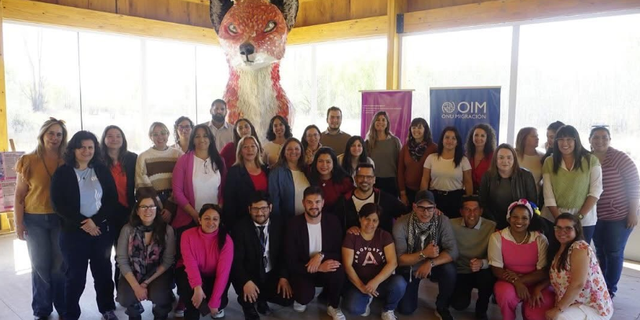
Participatory Local Migration Governance in Neuquén
Since 2022, the City of Neuquén has implemented a citywide urban innovation to manage growing migration diversity amid rapid urban expansion and regional economic transformation. As a strategic Patagonian hub influenced by mobility linked to regional development—particularly the Vaca Muerta energy corridor—the municipality transformed fragmented demands into a participatory, intercultural, and scalable public policy.
The initiative operates through a collaborative governance ecosystem built on three complementary pillars: the Municipal Migrant Assistance Center as the institutional access point; the Local Migrants Council (established in 2022) as a permanent participation mechanism; and a public integration agenda featuring Cultural Diversity Fairs, rights-awareness campaigns, and neighbourhood-based activities. The model combines institutional leadership, community participation, territorial coordination, and intergovernmental cooperation.
By 2025, the initiative delivered 370 specialized assistance cases, held four formal Council meetings, and reached 28,000 participants through intercultural fairs. In 2026, the Cultural Diversity Fair attracted 40,000 attendees. More than 11,000 people across 40 neighbourhoods responded to the Local Anti-Discrimination Survey, generating evidence to guide policy.
Massive migration has become a polarizing issue worldwide and the voices and needs of migrants are often unheeded in rapidly urbanizing cities. In response, Neuquén has developed tailored infrastructure and migrant support programs, including a Migrants Council, intercultural events, and anti-discrimination initiatives, to promote inclusion, social cohesion, and equitable access to services. Neuquén’s experience demonstrates that fast-growing cities can lead innovation not only in infrastructure, but also in inclusion, democratic governance, and social cohesion—offering a replicable model for managing diversity with social justice and long-term stability, in alignment with SDGs 10, 11, 16, and 17.