Tharaka Nithi County, Kenya
Using Digital Tools and Low Altitude Technology to Improve Access to Safe and Affordable Water and Health Care for Marginalized Communities
Tharaka Nithi County is leveraging digital innovation to address two persistent challenges: water scarcity and healthcare inaccessibility.
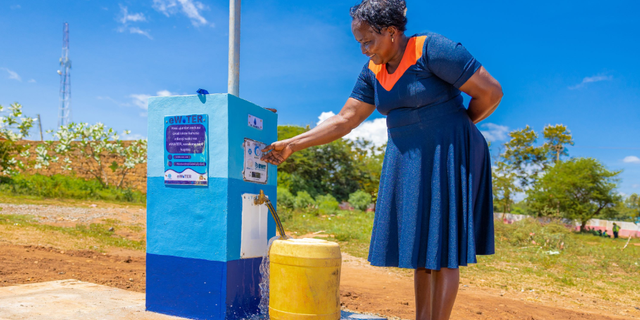
Through a public-private partnership launched in December 2023, the county introduced solar-powered smart water kiosks with prepaid digital taps and M-Pesa payment integration. The initiative has delivered over 8 million litres of clean water to more than 9,000 households, reduced the cost of a 20-litre jerrycan from KES 100 to just KES 5, and cut non-revenue water by 30%. Previously, women and children spent three to five hours daily collecting water—time now redirected toward education and income-generating activities. Supported by a USD 400,000 blended financing model and real-time digital monitoring, the program aligns with SDGs 6 and 11, offering a scalable model for underserved regions.
In addition, the county deployed autonomous drones in June 2023 to transport blood products, vaccines, anti-venom, and laboratory samples across over 60 kilometres. Delivery times have been reduced from over one hour to under 15 minutes. With more than 300 flights completed, 10 local pilots trained, and 15 health facilities connected, the initiative has reduced maternal mortality risks, eliminated vaccine stockouts, and shortened HIV test result turnaround from three weeks to five days. The USD 250,000 partnership model—comprising 75% in-kind drone contributions, 15% technical assistance, and 10% county support—builds local capacity while improving health outcomes. The initiative aligns with SDG 3.
The TC recognized that, through the innovative application of digital and low-altitude technologies, Tharaka Nithi County offers a new vision for the delivery of two essential services by transforming access to water and healthcare for marginalized populations in some of the most challenging contexts across the county, while bridging the urban/rural divide.